At the counter
Inbound work crowds out proactive selling.
Orders, expediting and service requests can use up a seller's day. Proactive time becomes what is left over.
Large accounts usually have a clear owner. Smaller customers can sit between field sales, inside sales and customer service, with nobody consistently responsible for growing them. Explore a practical approach to coverage, inside sales and AI built around profitable growth.
Start with the case for a proactive inside sales engine, the operating system behind it, and how one distributor centralized demand creation. Enter your work email and the PDF downloads right away.
Chapters 1 to 3 as a PDF download. Wording may still change before publication.

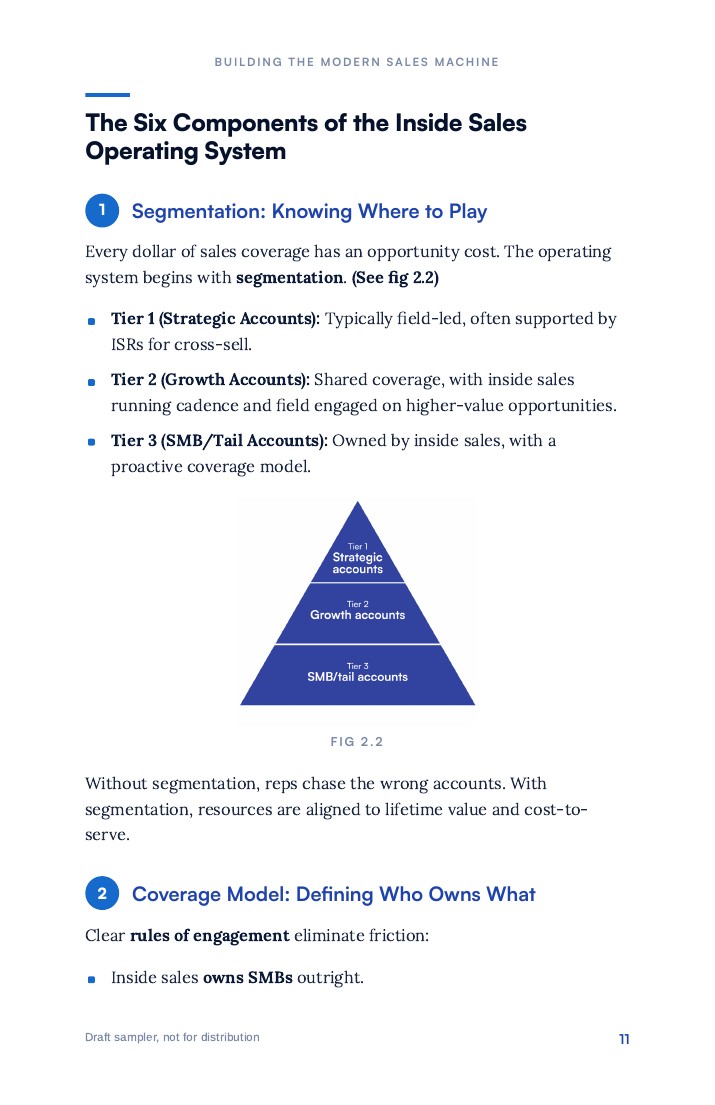
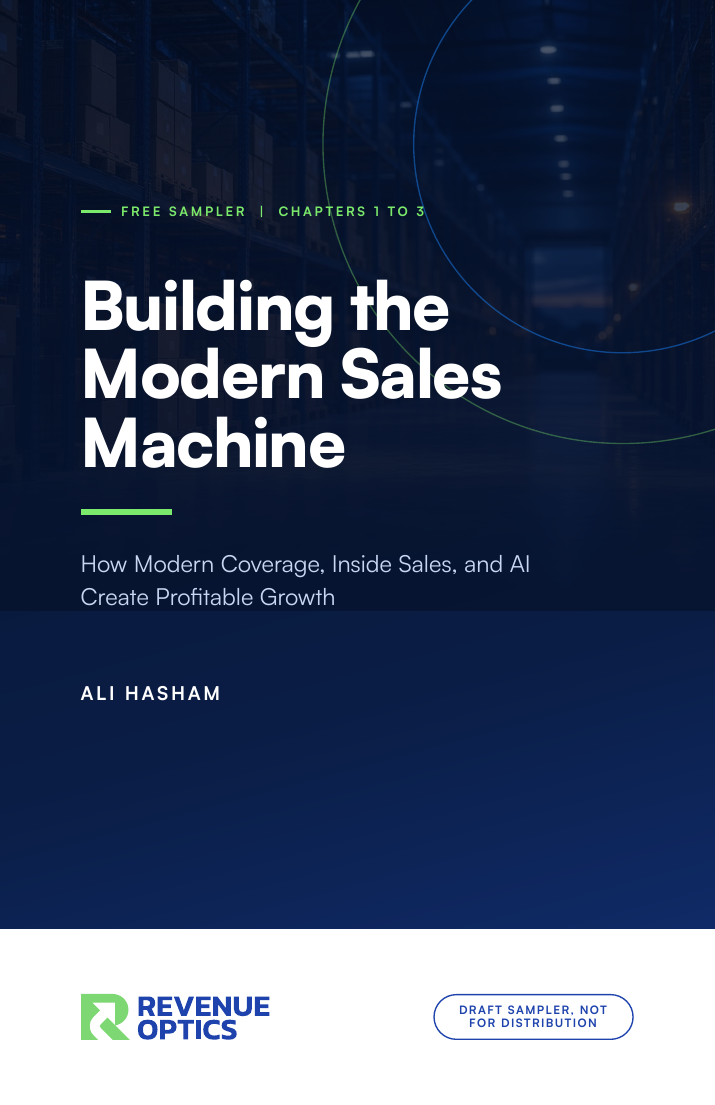 Chapters 1 to 3, PDF
How Modern Coverage, Inside Sales, and AI Create Profitable Growth
By Ali Hasham
A commercial operating model that fits the economics of your customer base and holds up in daily branch work. Purchase details will be posted here when they are confirmed.
Leaders who own growth across branches, field teams and inside sales.
Channel leaders who need partners to cover more of the customer base.
Operating partners looking for profitable growth that holds up under inspection.
An account list tells you who owns a customer. It does not tell you whether anyone starts the conversation, follows up a quote, notices an order gap or develops the next product category. When inbound orders and service demands use up the day, proactive selling becomes whatever time is left.
Orders, expediting and service requests can use up a seller's day. Proactive time becomes what is left over.
Who contacts the account, who owns the quote and who gets credit decides whether anyone acts.
Growth that dilutes margin or raises the cost to serve is not profitable growth.
Which customers have a defined standard for proactive contact?
How much selling capacity is left after inbound service work?
What happens when field sales and inside sales both see an opportunity?
How do you know added sales improved gross profit after the cost of serving them?
The book looks at the decisions that connect account segmentation, proactive inside sales, field collaboration, management discipline and practical AI. The goal is an operating model that fits the economics of your customer base.
Group customers by potential, buying behavior and cost to serve.
Write down who owns the account, the quote and the credit.
Separate proactive time from inbound service work.
Review contact, quotes, reorder gaps and realized gross profit.
Turn signals into accountable daily actions and adjust.
See where assignment and real contact differ.
Turn unwritten habits into rules your team can follow.
Keep the cadence that makes the system hold.
Branch A has an owner assigned to every account, so the account list looks complete. Now look at the contact record. In the smallest customer group, the team can show proactive contact for only some accounts in the last 90 days. The rest placed orders when they chose to. Nobody called them first.
The owner list is complete. The coverage is not. The assessment asks sixteen questions that help you check your own branch the same way.
Each circle is one account. Every account has an assigned owner.
Sixteen questions about how your team works today, then a few numbers. You get what is at stake in dollars, a tier, up to three priorities with a first action for each, and a short list of adjacent flags.
This assessment needs JavaScript. Please turn it on and reload the page.
Your result puts what is at stake in dollars beside the practices worth examining first. It is a directional self assessment, not a forecast. A deeper diagnostic needs operating data and a discussion with your leadership team.
A standard pod of 4 outbound inside sellers, with gross profit and revenue by year. The growth figures are the same for every company.
See where practice is in place, partly in place or missing across sixteen questions. Answers marked "not sure" are shown separately.
Specific enough to assign to a named person this week. Pricing, talent and AI show as flags.
Each tool comes from a chapter of the book. Start with the free templates, use the worksheets to see where you stand, and bring the harder questions to a working session with Revenue Optics.
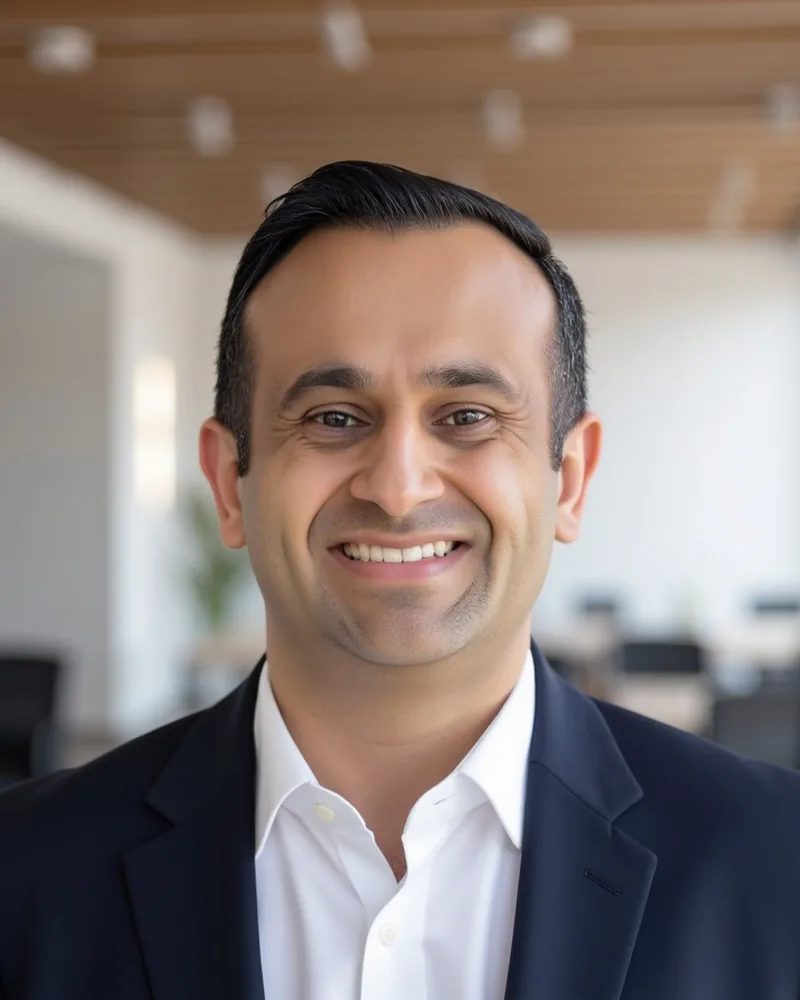
Ali Hasham is the Founder and CEO of Revenue Optics. His book looks at how modern coverage, inside sales and AI work together to create profitable growth in distribution.
Companies Ali has worked at.
 Director, Business Development
 Director, Business Development
 VP Sales Excellence, North America

Revenue Optics helps distribution and channel driven businesses examine coverage, design the operating model, build execution capability and sustain the management cadence. The first conversation establishes the issue, the evidence available and whether a scoped diagnostic makes sense.
Implementation by Revenue Optics
Distributor executives, commercial leaders, manufacturers that sell through distribution and private equity operators who are looking at profitable growth.
No. Coverage should reflect what each account needs, how it buys, its potential and the economics of serving it. The assessment does not prescribe one channel for everyone.
AI can help prioritize signals and prepare actions. Roles, capacity, incentives and management still decide whether the work gets done.
No. It is a directional self assessment based on your answers. A diagnostic that uses your operating data is a separate piece of work.
Possibly. Team options are not confirmed yet. Use the conversation form and tell us what you have in mind.
Purchase details will be posted here when they are confirmed. You can .
Enter your details and the PDF downloads on the next page.
Purchase details are not confirmed yet. Leave your email and we will tell you when they are.
Enter your details and your download appears right here.
Thanks. Your files are below. Save them to your computer.
Tell us a little about your situation. A person reviews each request.